
Getting a prescription in the US, and the medicines
First the prescription: who can prescribe, how insurance, Medicare and Medicaid decide, paying yourself, and why compounded versions are different. Then the medicines: what's approved, fakes, storage and official prices.
GLP-1 medicines need a prescription from a prescriber licensed in your state. Whether someone else pays depends on your coverage: many employer plans don't cover them for weight, Medicare can't except through a temporary $50-a-month program, and Medicaid varies by state. Without coverage, the makers sell directly at their own self-pay prices. Compounded versions are not FDA-approved. Talk to a doctor before starting, stopping or changing any medicine.
Key facts
- Prescription
- Always. Not sold over the counter. Not controlled substances, so no federal in-person rule.1,2
- Employer plans
- 19% of firms with 200+ workers cover them for weight loss; 43% of the largest. Usually with prior authorization.3
- Medicare
- Barred by law from covering weight-loss drugs. The temporary GLP-1 Bridge: $50 a month, July 2026 to December 2027.4,5
- Self-pay
- The makers' own prices run from $149 to $449 a month, by brand and dose. Checked Oct 12, 2026.14,15,16
- Compounded
- Not FDA-approved, and not generics. The FDA has warned dozens of online sellers since 2025.19,21
- Fakes
- Fake Ozempic pens found in the US supply chain, most recently December 202526
On this page
- Who can prescribe a GLP-1 in the US?
- Will my employer or private plan cover it?
- Does Medicare cover it? The GLP-1 Bridge
- Does Medicaid cover it?
- What if I pay myself?
- What about compounded semaglutide and tirzepatide?
- What rules do telehealth services follow?
- How do I check a pharmacy and a prescriber?
- What should a proper consultation include?
- What are the red flags?
- Questions to ask a provider
- Which GLP-1 medicines are FDA-approved, and for what?
- Brand or generic: what's the difference?
- Pen, vial or pill?
- How do I spot a fake, and store it right?
- What are the official prices?
- What does a year cost?
- Questions people ask
The order this guide follows. The prescriber comes first; the medicine comes second.
Who can prescribe a GLP-1 in the US?
Any prescriber licensed in your state with the authority to prescribe. There's no rule that it has to be a specialist.

All GLP-1 medicines need a prescription.1 Prescribers include doctors (MD or DO) and, depending on your state's rules, nurse practitioners and physician assistants. A telehealth prescriber generally needs a license in the state where you are when you get care.6
Semaglutide, tirzepatide, liraglutide and dulaglutide are not on the federal list of controlled substances, so there's no federal rule that you must be seen in person first. Phentermine, an older weight-loss pill, is on that list.2
For weight, the FDA labels cover adults with a BMI of 30 or more, or 27 to under 30 with at least one weight-related condition.1,7 For type 2 diabetes, Ozempic, Mounjaro and the others are prescribed by your own doctor or diabetes team, usually covered as a diabetes medicine.3
Will my employer or private plan cover it?
Maybe. Covering GLP-1s for weight loss is optional for employers, and most don't. If yours does, expect paperwork first.
In 2025, 19% of firms with 200 or more workers covered GLP-1 medicines mainly for weight loss. Among the largest firms, with 5,000 or more workers, it was 43%.3 Coverage for type 2 diabetes is more common; weight loss is where the gap is.3
- Prior authorization. Approval from your plan before it will pay for a prescription.8 Plans that cover GLP-1s for weight usually require it.3 Your prescriber sends your BMI, your conditions and anything else the plan asks for.
- Step therapy. A type of prior authorization where you must first try a cheaper drug on the plan's list before it will cover a more expensive one.9
- The drug list (formulary). Your plan, or the pharmacy benefit manager (PBM) that runs its drug benefit, decides which brands it covers, and it can change them. Ask which brand is preferred.9
- Savings cards. If your commercial plan covers the medicine, the makers' savings cards can bring your copay down: as little as $25 a month, up to set limits. They can't be used with government insurance such as Medicare or Medicaid.14,15,16
Other plans for veterans, the military and federal or state employees each set their own rules; ask yours directly. How prior authorization works, step by step.
Does Medicare cover it? The GLP-1 Bridge
Not for weight loss alone: federal law bars Medicare drug plans from covering medicines used for weight loss. A temporary program, the Medicare GLP-1 Bridge, works around that until the end of 2027.4,5
For other approved uses, Medicare drug plans (Part D) can cover them: type 2 diabetes, heart protection with Wegovy, sleep apnea with Zepbound, and MASH (a scarring fatty liver disease).4 The Bridge is not for people with type 2 diabetes, moderate to severe sleep apnea or MASH; they go through their own drug plan instead.5
| The Medicare GLP-1 Bridge | What CMS says |
|---|---|
| When | July 1, 2026, to December 31, 2027.5 |
| What you pay | $50 a month. It runs outside Part D, so your deductible doesn't apply, and the copay doesn't count toward your yearly out-of-pocket cap.5 |
| Which medicines | Foundayo, Wegovy (injection and pill) and the Zepbound KwikPen. Zepbound single-dose pens and vials are not covered.5 |
| Who qualifies | Adults on Medicare Part D, for weight reduction, with:
|
| How | Your prescriber requests it through one central prior-authorization process. Check eligibility at Medicare.gov/glp1bridge or call 1-800-MEDICARE.5 |
The makers' savings cards can't be used with Medicare.14,16 A separate model that would have let Part D plans cover these medicines in 2027 will not go ahead; CMS extended the Bridge through 2027 instead.36 The GLP-1 Bridge explained.
Does Medicaid cover it?
It depends on your state. Federal law lets states leave weight-loss drugs out, and most do.10
As of January 2026, 13 state Medicaid programs covered GLP-1s for obesity, down from 16 in October 2025. California, New Hampshire, Pennsylvania and South Carolina ended coverage. Where it's covered, it usually needs prior authorization.10 Type 2 diabetes is covered as a diabetes medicine.
CMS also offered states a voluntary model in which it negotiates prices with the makers. We could not find an official list of which states joined. Ask your state Medicaid program, or see Medicaid and GLP-1s.37
What if I pay myself?
The makers now sell directly to people paying cash, at their own self-pay prices, which are far below the list price.14,15,16
- Eli Lilly (Zepbound, Foundayo) sells through its own LillyDirect pharmacy and other pharmacies.15,16
- Novo Nordisk (Wegovy) sells through NovoCare Pharmacy, and the self-pay offer can be used at other pharmacies.14
- TrumpRx.gov is a government website that lists these self-pay prices and sends you on to partner pharmacies or the makers' programs. It doesn't sell medicines itself.17
You still need a prescription from any licensed prescriber. People with Medicare or Medicaid can pay the self-pay price outside their insurance, Novo says.14 The prices, with dates, are below. We list the makers' prices only; we don't list or compare any pharmacy's or telehealth service's prices. GLP-1 costs without insurance.
What about compounded semaglutide and tirzepatide?
Compounded versions are not FDA-approved. The FDA does not review their safety, effectiveness or quality before they're sold, and they are not the same as generics.19 We don't recommend them.
What "compounded" means. A compounding pharmacy mixes its own version of a medicine. In the US, that's allowed for a patient's individual need, and more widely during a shortage of the approved drug.18 Some pharmacies (called 503A) compound for individual prescriptions; larger "outsourcing facilities" (503B) make bigger batches.18,20
- The shortages are over. The FDA declared the tirzepatide shortage resolved in December 2024 and the semaglutide shortage in February 2025. The grace periods for compounders ended between February and May 2025.18 Since then, pharmacies may not regularly make what are essentially copies of an approved drug.20
- The FDA has warned sellers. It sent warning letters to dozens of companies in September 2025, 30 telehealth companies in March 2026, and 25 more in June 2026, over claims such as "same active ingredient" or "clinically proven".21,22 In February 2026, it said it would act against non-FDA-approved GLP-1s being mass-marketed.23
- Side-effect reports. By May 31, 2026, the FDA had 990 reports of side effects with compounded semaglutide and more than 730 with compounded tirzepatide. It has also had reports of dosing mistakes.19
- Salt forms. The FDA says it knows of no lawful basis for compounding with semaglutide sodium or acetate, which are different from the approved medicine.19
- More change is coming. In April 2026 the FDA proposed stopping outsourcing facilities from compounding semaglutide, tirzepatide and liraglutide from bulk ingredients. We found no final decision yet.20
What rules do telehealth services follow?
The same as any prescriber: a license in your state, a real assessment, and a prescription for an approved medicine.
- State license. The prescriber must be licensed where you are when you get care. Compacts between states make extra licenses faster to get, but don't remove the need.6
- No federal in-person rule for GLP-1s, because they are not controlled substances. Some states have their own rules on telehealth prescribing.2
- Honest pricing. The Federal Trade Commission (FTC) has acted against a telehealth weight-loss company that advertised monthly prices leaving out the medicine, lab and consultation costs, and hid long commitments.24 Guide 7 covers what to check.
How do I check a pharmacy and a prescriber?
Look them up with the state boards that license them. It takes a few minutes.
The pharmacy
The FDA says a safe online pharmacy:25
- always requires a prescription;
- gives a physical address and phone number in the US;
- has a licensed pharmacist to answer your questions;
- is licensed with a state board of pharmacy. You can check it in the board's license database using the FDA's BeSafeRx locator; if it isn't listed, don't use it.25
The prescriber
Your state medical board (or nursing board, for nurse practitioners) lists who is licensed. The Federation of State Medical Boards' free DocInfo.org search shows a doctor's license history across states and any action by a state medical board.27
What should a proper consultation include?
Questions about your health and medicines, your weight checked properly, and a plan for follow-up.
There's no single official checklist for a GLP-1 consultation. This list brings together what the medicines' labels say a prescriber should check.1,7
- Your history. Medullary thyroid cancer or MEN 2 (multiple endocrine neoplasia type 2, a rare inherited condition) in you or your family rules these medicines out.1 Past pancreatitis or gallstones matter too.1
- Your other medicines. Insulin, or diabetes pills called sulfonylureas, can cause low blood sugar when combined with a GLP-1.1 The dose of those may need to drop.
- Your weight, checked. Not just typed into a form. Guide 1 explains the numbers.
- Eyes, if you have diabetes. The label warns about worse eye disease (retinopathy) in people who already have it.1
- Pregnancy and birth control. Stop Wegovy at least 2 months before a planned pregnancy. On tirzepatide, switch from the pill or add a condom for 4 weeks after starting and after each dose increase.1,7
- Any surgery or procedure coming up. These medicines slow how fast the stomach empties, so food can still be there under anesthesia. Tell the team doing the procedure that you take one.1
- A follow-up plan. Who you contact with side effects, and how your progress will be reviewed.
What are the red flags with a pharmacy, clinic or app?
Walk away if you can't check who they are, if nobody assesses you properly, or if the product isn't FDA-approved.
-
No prescription neededSafe pharmacies always require one.25Dispenses only against a prescription from a licensed prescriber.
-
Not licensed with a state boardOr no US address, phone number or pharmacist.25Shows its license and address, and both check out with the state board.
-
Names the exact FDA-approved brand and dose it will dispense.
-
"Research use only" or "not for human use"The FDA has warned sellers of these products.19An FDA-approved pen, vial or pill in its sealed pack.
-
A low monthly price with no detailThe FTC has acted against ads that left out the cost of the medicine, labs and consultations.24Shows the full monthly cost, including the medicine, in writing, and how to cancel.
-
Prices that seem too good to be trueThe FDA lists deep discounts as a warning sign of an unsafe pharmacy.25Prices you can compare with the makers' published self-pay prices.
Questions to ask a provider
Take these to the consultation. A good prescriber will be glad you asked.
- Who is the prescriber, and are they licensed in my state?
- Which pharmacy fills it, and is it licensed with my state board of pharmacy?
- Is this an FDA-approved brand, or a compounded version?
- Do I meet the label criteria for this medicine, and why?
- Does my insurance cover it, and will you handle the prior authorization?
- Which side effects should make me contact you, and how do I reach you?
- How will my dose go up, and who decides each step?
- Does it affect my other medicines, my birth control or a pregnancy plan?
- What is the full monthly cost at the full dose, including any membership, and how do I cancel?
- What happens when I stop, and how long would I take it?
Before you go further
- Prescription only. Never start one without a prescriber.1
- Know the risks first. Guide 5: Side effects and risks.
- No promise of results. Weight loss varies a lot from person to person, and some people lose little.
We list brands and official prices as facts. We don't recommend any brand, company or seller, and we earn nothing from them.
Which GLP-1 medicines are FDA-approved, and for what?
Five medicines. Semaglutide, tirzepatide, orforglipron and liraglutide have brands for weight; Ozempic, Rybelsus, Mounjaro, Trulicity and Victoza are for type 2 diabetes.
The medicine is what works in your body; the brand is the name on the box. Acetaminophen is a medicine; Tylenol is a brand of it. One medicine can have several brands, each approved for different uses.
Diabetes approved for type 2 diabetes Weight approved for weight management
- Wegovy injectionWeight1Weekly pen; Novo NordiskAlso approved to lower heart risk (2024), for teens 12 and over with obesity, and for a scarring fatty liver disease, MASH (2025). Wegovy HD 7.2 mg added in 2026.1
- Wegovy pillWeight1Daily tablet; approved December 2025Also approved to lower heart risk.1
- OzempicDiabetes11Weekly pen, and tabletsAlso protects the heart and kidneys in diabetes. Not approved for weight loss; using it for that is "off-label".11,12
- RybelsusDiabetes12Daily tablet
- TrulicityDiabetes32Weekly pen
Medicine pages: Semaglutide Tirzepatide Liraglutide Dulaglutide
Brand or generic: what's the difference?
A generic is an FDA-approved copy made by another company once the patent ends. In the US, only liraglutide has generics so far.30,31
The first generic liraglutide, a copy of Victoza for type 2 diabetes, was approved in December 2024.30 The first generic for weight loss, a copy of Saxenda, was approved and launched in August 2025.31
There is no FDA-approved generic semaglutide or tirzepatide. Compounded versions are not generics, and the FDA has told sellers not to call them that.19,23 Is there a generic Wegovy or Zepbound?
Switching between brands is a prescriber's decision. Even brands of the same medicine aren't always swapped dose for dose: the label for Ozempic tablets and Rybelsus says they are not interchangeable milligram for milligram.12
Pen, vial or pill: does it matter?
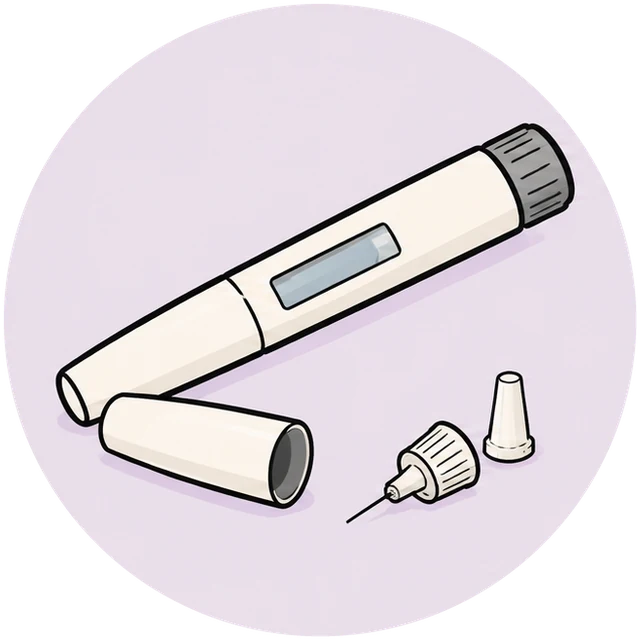
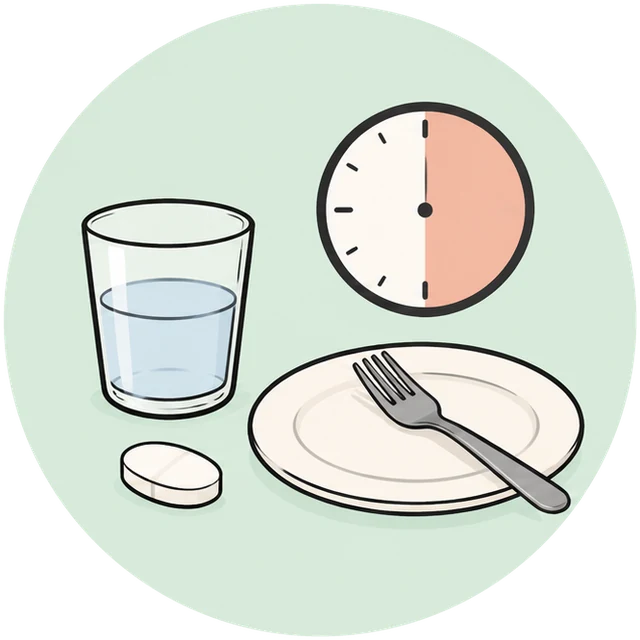
US GLP-1 injections come in pre-filled pens, and Zepbound also in FDA-approved vials. Pills need a routine, which differs by brand.
How do I spot a fake, and store it right?
Fake Ozempic pens have been found in the US drug supply chain. Only use a pack from a state-licensed pharmacy, against your prescription.26

Check the pack when it arrives
Something wrong? Don't use it. Keep the pen and packaging, tell the pharmacy, and report it to the FDA's MedWatch program (1-800-FDA-1088). Guide 5 explains how.34
Keep it cold
The Zepbound KwikPen and multi-dose vial can be kept in the fridge or at room temperature up to 86°F; throw them away after 30 days at room temperature, 30 days after first use, or after 4 weekly doses.7 Wegovy pills and Foundayo need no fridge: store at 68–77°F (20–25°C).1,28 Check the Medication Guide in your own pack. Heat, travel and the TSA.
What are the official prices?
There are two kinds: the list price, which is what insurers' prices start from, and the makers' own self-pay prices for people paying cash. All checked Oct 12, 2026.
List prices (before rebates), for a month
| Brand | List price, per month |
|---|---|
| Ozempic | $1,028 |
| Wegovy (pen or pill) | $1,349 |
| Zepbound | $1,087 |
As shown on TrumpRx.gov, checked Oct 12, 2026.17 Novo Nordisk says it will cut the list price of Wegovy, Ozempic and Rybelsus to $675 a month from January 1, 2027, and that this doesn't change its self-pay prices.35
Foundayo (orforglipron): Lilly self-pay prices
| Strength | Per month |
|---|---|
| 0.8 mg | $149 |
| 2.5 mg | $199 ($149 through Dec 31, 2026) |
| 5.5 mg and 9 mg | $299 (5.5 mg: $199 through Dec 31, 2026) |
| 14.5 mg and 17.2 mg | $349 ($299 if each refill is bought within 45 days) |
Lilly, Foundayo coverage and savings page, checked Oct 12, 2026. A month is 30 days.16
Wegovy (semaglutide): Novo Nordisk self-pay prices
| Form and strength | Per month |
|---|---|
| Pill 1.5 mg | $149 |
| Pill 4 mg | $199 |
| Pill 9 mg and 25 mg | $299 |
| Pen, all doses 0.25–2.4 mg | $349 (new patients: $199 for the first 2 months, offer through Dec 31, 2026) |
| Wegovy HD pen 7.2 mg | $399 |
NovoCare Wegovy self-pay offer, checked Oct 12, 2026. A month is 4 pens or 30 tablets.14
Zepbound (tirzepatide): Lilly self-pay prices, single-dose vial or KwikPen
| Strength | Per month |
|---|---|
| 2.5 mg | $299 |
| 5 mg | $399 |
| 7.5, 10, 12.5 and 15 mg | $449, if each refill is bought within 45 days of the last one |
Lilly, Zepbound coverage and savings page, checked Oct 12, 2026. If a refill is later than 45 days, Lilly's regular prices apply.15
- Listed alphabetically by brand, not ranked by price. They're different medicines at different doses; your prescriber chooses.
- TrumpRx.gov shows the starting prices: $149 a month for the Wegovy pill, $199 for the Wegovy pen and for Ozempic, and $299 for Zepbound. These are the lowest-dose or introductory prices; higher doses cost more.17,14,15
- With commercial insurance that covers it, the makers' savings cards can bring the cost down to as little as $25 a month, up to set limits. Not for Medicare, Medicaid or other government insurance.14,15,16
- Prices change often, and several offers end on December 31, 2026. Check the maker's page before you buy.
- Not shown: Mounjaro, Rybelsus, Trulicity, Saxenda and generic liraglutide, where we found no maker self-pay price we could confirm from an official page.
What does a year cost?
It depends on who pays. With Medicare's GLP-1 Bridge, $50 a month while it runs. Paying yourself, the medicine alone comes to about $5,000 to $5,600 a year for Zepbound, depending on your dose.
Work out your own cost
Choose a medicine. The cost calculator adds up the dose steps for 6 or 12 months at current prices, and you can change the plan.
Opens the cost calculator in a new tab. Nothing you choose leaves your device.With insurance. Your plan's copay, which a savings card may lower, if your plan covers it.3,15 With the Medicare GLP-1 Bridge, $50 a month, or $600 a year, until it ends on December 31, 2027.5
Paying yourself. Here is a worked example for Zepbound, using Lilly's self-pay prices above and counting a month as 4 weekly doses: 6 fills is 24 weeks and 13 fills is a year. The label starts at 2.5 mg for 4 weeks, then 5 mg; after that the dose can rise by 2.5 mg at a time, at least 4 weeks apart, up to 15 mg.7 This is an example for the sum, not a suggestion; your prescriber decides your dose.
| Zepbound, self-pay | 6 fills (24 weeks) | 13 fills (1 year) |
|---|---|---|
| Staying on 5 mg (one fill at 2.5 mg, then 5 mg) | $2,294 | $5,087 |
| Rising to 15 mg (one fill at each step, then 15 mg) | $2,494 | $5,637 |
Staying on 5 mg: $299 + 5 × $399 = $2,294; a year is $299 + 12 × $399 = $5,087. Rising to 15 mg: $299 + $399 + 3 × $449 (7.5, 10, 12.5 mg) = $2,045 for the first 5 fills, then $449 a fill: $2,494 by 6 fills and $2,045 + 8 × $449 = $5,637 by 13. Assumes every refill within 45 days; excludes any consultation, membership or shipping fees.15,7
Budget in years, not months: Guide 9 covers what happens when you stop. Lilly says HSA or FSA eligibility may vary by plan; check with your benefits administrator.16
The risks, in brief
- Nausea, vomiting, diarrhea and constipation are common, mostly when the dose goes up.1
- Inflamed pancreas (pancreatitis): severe stomach pain that won't settle.1
- Gallbladder problems, including gallstones.1
- Losing too much fluid from vomiting or diarrhea can harm the kidneys.1
- Not for people with medullary thyroid cancer or MEN 2 in themselves or their family.1
- Not in pregnancy. Stop Wegovy at least 2 months before trying.1
Questions people ask
Does Medicare cover Wegovy or Zepbound?
Not for weight loss alone, by law. From July 2026 to December 2027, the Medicare GLP-1 Bridge covers Wegovy, the Zepbound KwikPen and Foundayo for weight at $50 a month, for people who meet its BMI and health criteria. Medicare drug plans can cover them for other approved uses, such as heart protection or sleep apnea.4,5
How much is Wegovy or Zepbound without insurance?
At the makers' self-pay prices, checked Oct 12, 2026: the Wegovy pen is $349 a month ($199 for the first 2 months for new patients, through 2026), the Wegovy pill $149 to $299, and Zepbound $299 to $449 depending on the dose.14,15 See all prices.
Is compounded semaglutide legal?
Compounding is legal in limited cases, but compounded semaglutide is not FDA-approved, and since the shortage ended in 2025, pharmacies may not regularly make copies of the approved drug. The FDA has warned many sellers.18,19,21 See compounded versions.
Can I use a savings card with Medicare?
No. The makers' savings cards exclude people with government insurance, including Medicare and Medicaid. You can still pay the self-pay price outside your insurance.14,16
Is it safe to get a GLP-1 through telehealth?
It can be, from a prescriber licensed in your state and a state-licensed pharmacy, for an FDA-approved medicine.6,25 Check both, and ask whether the medicine is compounded. Guide 7 covers what to check.
Is Ozempic approved for weight loss?
No. Ozempic is approved for type 2 diabetes. Wegovy is the semaglutide brand approved for weight management.11,1
Can I keep the pen out of the fridge?
Unused pens go in the fridge. If needed, Zepbound single-dose pens and vials can stay at up to 86°F (30°C) for up to 21 days in total, and Wegovy single-dose pens for up to 28 days.7,1 Check the Medication Guide in your own pack.
Before you move on
- Check your coverage first: employer plan, Medicare's GLP-1 Bridge, or your state's Medicaid.
- Without coverage, the makers' self-pay prices are the official reference.
- Check the prescriber's and the pharmacy's licenses with your state boards.
- FDA-approved brands only: compounded versions are not FDA-approved or generics.
- If you pay yourself, budget for the full dose and for years, not the starting price.

Sources
- Novo Nordisk. Wegovy (semaglutide) injection and tablets, US prescribing information and Medication Guide, revised June 2026: indications, dosing, tablet administration, warnings, pregnancy, storage. novo-pi.com
- Drug Enforcement Administration, Diversion Control Division. Controlled substances, alphabetical order (phentermine listed; semaglutide, tirzepatide, liraglutide and dulaglutide not listed). List dated August 27, 2026. deadiversion.usdoj.gov
- KFF. 2025 Employer Health Benefits Survey (19% of firms with 200 or more workers cover GLP-1s primarily for weight loss; 43% of firms with 5,000 or more; coverage typically subject to utilization controls such as prior authorization). kff.org
- KFF. Nearly four million Medicare beneficiaries met the eligibility criteria in 2023 for the Medicare GLP-1 Bridge (statutory prohibition unchanged; Part D coverage for diabetes, sleep apnea and MASH). June 29, 2026. kff.org
- Centers for Medicare & Medicaid Services. Medicare GLP-1 Bridge: information for prescribers (July 1, 2026, to December 31, 2027; $50 copay outside Part D; covered products; clinical criteria; single prior-authorization processor; Medicare.gov/glp1bridge, 1-800-MEDICARE). Product No. 12235, June 2026. cms.gov
- American Medical Association. How state licensing has evolved to meet telehealth's challenges (physicians "licensed in the state where their patients are receiving their care"; Interstate Medical Licensure Compact). October 12, 2023. ama-assn.org
- Eli Lilly. Zepbound (tirzepatide) US prescribing information and instructions for use, revised August 2026: indications, dosing, oral contraceptives, storage of pens, vials and KwikPen. uspl.lilly.com
- HealthCare.gov. Glossary: prior authorization ("Approval from a health plan that may be required before you get a service or fill a prescription in order for the service or prescription to be covered by your plan"). healthcare.gov
- Medicare.gov. Drug plan rules (formulary; prior authorization; step therapy: trying a less expensive drug on the plan's list first). Checked October 12, 2026. medicare.gov
- KFF. Medicaid coverage of and spending on GLP-1s (13 state programs covered GLP-1s for obesity under fee-for-service as of January 2026, from 16 in October 2025; California, New Hampshire, Pennsylvania and South Carolina ended coverage; coverage typically subject to prior authorization). January 16, 2026. kff.org
- Novo Nordisk. Ozempic (semaglutide) injection, US prescribing information, revised May 2026. novo-pi.com
- Novo Nordisk. Rybelsus and Ozempic (semaglutide) tablets, US prescribing information, revised January 2026 ("not substitutable on a mg-to-mg basis"). novo-pi.com
- Eli Lilly. Mounjaro (tirzepatide) US prescribing information, revised August 2026. uspl.lilly.com
- Novo Nordisk. NovoCare: Wegovy self-pay and savings offer (pill $149 for 1.5 mg, $199 for 4 mg, $299 for 9 and 25 mg; pen $199 for the first 2 months for new patients through December 31, 2026, then $349; Wegovy HD 7.2 mg $399; government beneficiaries can pay the self-pay price but can't use the commercial savings card). Checked October 12, 2026. novocare.com
- Eli Lilly. Zepbound coverage and savings (self-pay vial and KwikPen: 2.5 mg $299, 5 mg $399, 7.5–15 mg $449 with refills within 45 days; savings card "as little as $25", up to $1,300 a year). Checked October 12, 2026. zepbound.lilly.com
- Eli Lilly. Foundayo coverage and savings (regular self-pay prices $149 for 0.8 mg, $199 for 2.5 mg, $299 for 5.5 and 9 mg, $349 for 14.5 and 17.2 mg; temporary reductions through December 31, 2026; $299 for 14.5 and 17.2 mg with refills within 45 days; savings card $25, government beneficiaries excluded; "FSA/HSA eligibility may vary by plan"). Checked October 12, 2026. foundayo.lilly.com
- TrumpRx.gov (US government price listing; does not dispense; lists Wegovy pill "$149/mo", Wegovy pen "$199/mo", Ozempic "$199/mo", Zepbound "$299/mo", each "down from" list prices of $1,349, $1,349, $1,028 and $1,087). Checked October 12, 2026. trumprx.gov
- FDA. FDA clarifies policies for compounders as national GLP-1 supply begins to stabilize (tirzepatide shortage resolved December 2024, semaglutide February 2025; end dates for 503A and 503B enforcement discretion). Content current as of April 1, 2026. fda.gov
- FDA. FDA's concerns with unapproved GLP-1 drugs used for weight loss (compounded drugs not FDA-approved; 990 adverse event reports for compounded semaglutide and more than 730 for compounded tirzepatide as of May 31, 2026; dosing errors; salt forms; "research use only" products). Content current as of October 1, 2026. fda.gov
- Frier Levitt. FDA proposes excluding semaglutide, tirzepatide and liraglutide from the 503B bulks list (proposal of April 30, 2026; comment period extended to July 30, 2026; essentially-copies limits for 503A). May 20, 2026. Law-firm analysis. frierlevitt.com
- FDA. FDA warns 30 telehealth companies against illegal marketing of compounded GLP-1s ("are not FDA-approved… not the same as generic drugs"). March 3, 2026. fda.gov
- McDermott+. FDA takes aim at misleading online claims for compounded GLP-1 drugs (25 warning letters, June 16, 2026). June 30, 2026. Law-firm analysis. mcdermottlaw.com
- FDA. FDA intends to take action against non-FDA-approved GLP-1 drugs (firms may not claim compounded products are "generic versions or the same as drugs approved by FDA"). February 6, 2026. fda.gov
- Alston & Bird. FTC deceptive-practices settlement with a telehealth company: the FTC's final order of December 3, 2025, against NextMed (Southern Health Solutions), whose $138–$188 monthly membership prices did not include the GLP-1 drugs, lab work or required consultations; $150,000 and a ban on misrepresenting costs. December 11, 2025. Law-firm analysis. alston.com
- FDA. How to buy medicines safely from an online pharmacy (signs of a safe online pharmacy; check the license with the state board of pharmacy via BeSafeRx). Content current as of January 2, 2025. fda.gov
- FDA. FDA warns consumers not to use counterfeit Ozempic (semaglutide) found in US drug supply chain (December 21, 2023, April 14, 2025, December 5, 2025; Novo Nordisk 1-800-727-6500). fda.gov
- Federation of State Medical Boards. DocInfo tool provides consumers physician licensure and disciplinary data (free search of state medical board actions, license states, medical school and certification). August 19, 2015. newswise.com
- Eli Lilly. Foundayo (orforglipron) US prescribing information, revised July 2026 (weight management in adults; with or without food; storage 68–77°F). uspl.lilly.com
- Novo Nordisk. Saxenda (liraglutide) US prescribing information, revised February 2026. novo-pi.com
- FDA. FDA approves first generic of once-daily GLP-1 injection to lower blood sugar in patients with type 2 diabetes (generic liraglutide, Victoza reference). December 23, 2024. fda.gov
- Teva Pharmaceuticals. Teva announces FDA approval and launch of generic Saxenda (liraglutide injection), first generic GLP-1 indicated for weight loss. August 28, 2025. Company announcement. placera.se
- Eli Lilly. Trulicity (dulaglutide) US prescribing information, revised March 2026. uspl.lilly.com
- America's Poison Centers. Poison Control: 1-800-222-1222 (free, expert and confidential; call 911 if someone collapses, has a seizure, has trouble breathing or can't be awakened). Checked October 12, 2026. poison.org
- FDA. MedWatch: the FDA safety information and adverse event reporting program (1-800-FDA-1088). Content current as of October 9, 2026. fda.gov
- Novo Nordisk. Novo Nordisk announces significant reduction in US list price for Wegovy, Ozempic and Rybelsus (to $675 a month from January 1, 2027; no impact on direct-to-patient self-pay prices). February 24, 2026. novonordisk.com
- KFF. CMS extends Medicare's short-term Bridge program for GLP-1 obesity drug coverage (the BALANCE Model will not proceed in Part D for 2027; the Bridge runs through December 31, 2027). kff.org
- KFF. What to know about the BALANCE Model for GLP-1s in Medicare and Medicaid (states may join the Medicaid part; CMS negotiates price and terms with the makers). kff.org
Last checked Oct 12, 2026 · Next review due Jan 2027 · Report an error
How this guide was made. Written by the GLP Guidebook team from the sources above: FDA labels and notices, CMS, Medicare.gov and HealthCare.gov pages, KFF research, the FTC, state-licensing bodies, and the makers' own published prices. Prices are list prices or the makers' self-pay prices, with the date we checked them; we don't list or compare any pharmacy's, clinic's or telehealth service's prices. It's general information, not medical advice. Talk to your doctor before starting, stopping or changing any medicine. In an emergency, call 911. Poison Control: 1-800-222-1222. How we write